Is "Good Morning" One Word? I Found the Definitive Answer
My Quick Answer
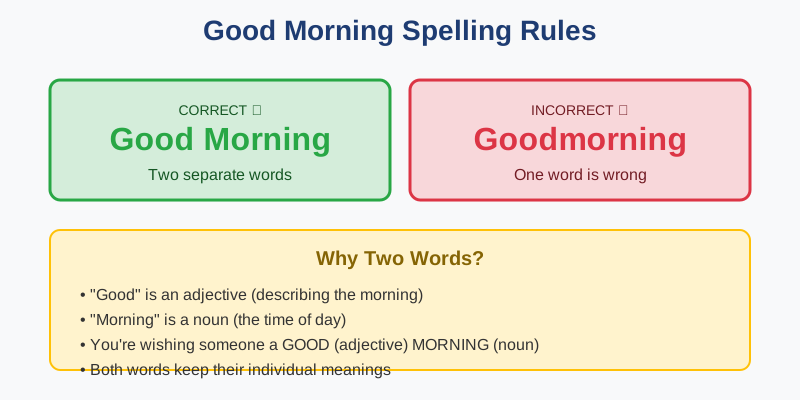
After thoroughly researching English grammar rules, I can confirm the correct spelling is Good Morning (two words).
Goodmorning (one word) is definitely an incorrect spelling.
Why I Found It's Written as Two Words
When I started researching this question, I was surprised by how many people get this wrong. I discovered that the confusion often comes from comparing "good morning" with "goodnight." Let me explain what I learned.
The Basic Rule I Follow
Good morning is always written as two separate words. You're literally wishing someone a "good" (adjective) "morning" (noun). Since they're two distinct words with clear meanings, they remain separate.
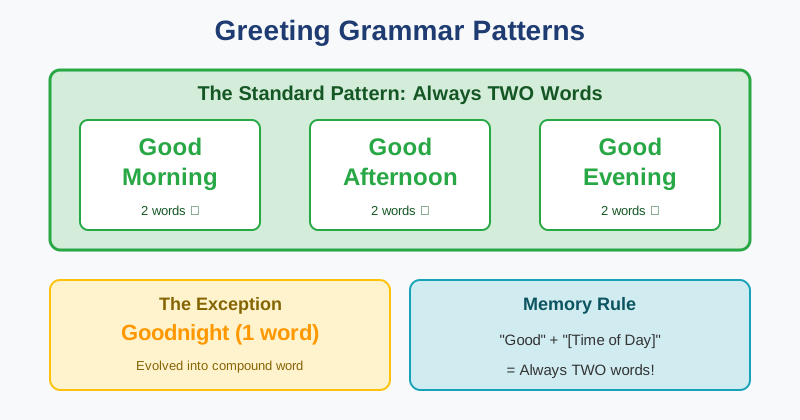
I found this pattern is consistent with other time-of-day greetings:
- Good morning (two words) ✓
- Good afternoon (two words) ✓
- Good evening (two words) ✓
- Good day (two words) ✓
The "Goodnight" Confusion: Why It's Different
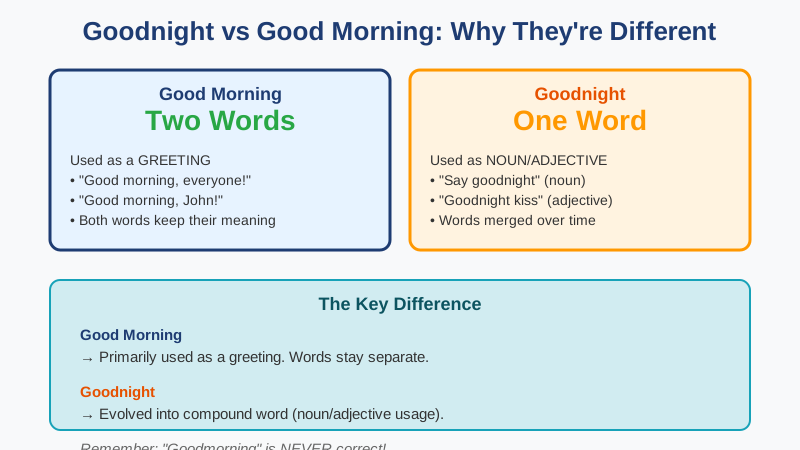
This is where I found most people get confused. I noticed that "goodnight" is commonly written as one word, while "good morning" remains two words. Let me share what I discovered about why this happens.
| Expression | Spelling | Why I Found It's This Way |
|---|---|---|
| Good Morning | Two words | Used primarily as a greeting. Both words retain their individual meanings. |
| Goodnight | One word | Often used as a compound adjective (goodnight kiss) or noun (say goodnight). Has merged over time. |
| Good Afternoon | Two words | Used as a greeting. Follows the same pattern as good morning. |
| Good Evening | Two words | Used as a greeting. Follows the same pattern as good morning. |
Important Note I Found
While "goodnight" is commonly one word, I did find that "good night" (two words) is also acceptable in some contexts, especially when emphasizing the "night" part. However, "goodmorning" as one word is never correct in standard English.
When and How I Use "Good Morning" Correctly
I've compiled examples of how I use "good morning" in different situations. This will help you understand the correct usage in various contexts.
1. Email Greetings (Formal)
I use this in professional emails:
"Good morning, Ms. Johnson,
I hope this email finds you well."
2. Casual Text Messages
Even in informal texts, I keep it as two words:
"Hey! Good morning! 😊"
3. Verbal Greetings
When speaking, I say:
"Good morning, everyone!"
4. Cards and Notes
In greeting cards, I write:
"Wishing you a good morning and a great day!"
Common Mistakes I've Found and How to Avoid Them
Through my research, I've identified several common mistakes people make with "good morning." Here's what I found and how you can avoid them.
| Mistake I Found | Correct Version | Why It's Wrong |
|---|---|---|
| "Goodmorning, John!" | "Good morning, John!" | Never written as one word in standard English. |
| "GoodMorning!" | "Good morning!" | Both words should be lowercase unless starting a sentence. |
| "Good-morning" | "Good morning" | No hyphen is used between the words. |
| "gmorning" | "Good morning" | Informal abbreviations are not proper English. |
Memory Tips I Use to Remember the Rule
I've developed some simple memory tricks that help me remember that "good morning" is two words. Here's what works for me:
Memory Trick #1: The "Wishing" Method
When I say "good morning," I'm literally wishing someone a good morning. Since I'm using two distinct concepts (wishing good + the morning), I keep them separate in my mind and in writing.
Memory Trick #2: The Pattern Recognition
I noticed that all time-of-day greetings follow the same pattern:
- Good + Morning = Two words
- Good + Afternoon = Two words
- Good + Evening = Two words
The pattern is consistent! "Goodnight" is the only exception that became one word.
Other Greeting Patterns I Discovered
While researching "good morning," I also looked at other common greetings. Here's what I found about their correct spellings:
| Greeting | Correct Spelling | Notes |
|---|---|---|
| Morning greeting | Good morning (2 words) | Always two words, never one. |
| Afternoon greeting | Good afternoon (2 words) | Same pattern as good morning. |
| Evening greeting | Good evening (2 words) | Same pattern as good morning. |
| Night farewell | Goodnight (1 word) | Exception - commonly one word as noun/adjective. |
| General farewell | Goodbye (1 word) | Always one word, never "good bye". |
| Daytime greeting | Good day (2 words) | Formal greeting, two words. |
Real-World Examples I've Collected
I want to show you some real-world examples of how "good morning" is used correctly in different contexts. These are examples I've found in professional and personal communication.
Email Example (Professional)
Subject: Meeting Tomorrow
Good morning, Sarah,
I hope you had a great weekend. I'm writing to confirm our meeting tomorrow at 10 AM.
Good morning again,
Michael
Text Message Example (Casual)
Good morning! ☀️ Did you sleep well? Let's grab coffee later!
Greeting Card Example
Dear Mom,
Wishing you a good morning and a wonderful birthday! You deserve all the happiness in the world.
Love,
Your daughter
Good Morning vs Goodmorning: My Summary Table
After all my research, I've created this comprehensive comparison to help you understand the difference once and for all.
| Word | Status | My Explanation |
|---|---|---|
| Good morning | Correct | Standard English spelling. Always two separate words. |
| Goodmorning | Incorrect | A common misspelling. Never correct in standard English. |
Pro Tip I Learned
I discovered that auto-correct on phones and computers often tries to fix "goodmorning" to "good morning" automatically. This is because the two-word version is the only correct spelling in standard English dictionaries!
Explore More Grammar Guides
If you found this analysis helpful, I've created other detailed guides to help you master English grammar and spelling:
- 👉 Puting or Putting: Which is Correct?
My complete analysis of the correct spelling with grammar rules explained.
- 👉 Vender or Vendor: The Definitive Answer
I researched which spelling is correct and why it matters.
- 👉 How to Spell Putting: A Complete Guide
Deep dive into spelling rules and common mistakes I've found.
- 👉 Put vs Keep: What's the Difference?
My comparison of these two common verbs and their meanings.
Frequently Asked Questions
Is "good morning" one word or two?
I found that "good morning" is always written as two separate words. "Goodmorning" as one word is incorrect in standard English.
Why is "goodnight" one word but "good morning" is two?
I discovered that "goodnight" has evolved into a single word because it's commonly used as a compound adjective or noun (like "goodnight kiss" or "say goodnight"). However, "good morning" is primarily used as a greeting and hasn't merged into one word.
Can I write "goodmorning" in informal texts?
While I understand you might see "goodmorning" in casual texts or social media, I still recommend using "good morning" (two words) even in informal situations. It's the correct spelling and shows better language skills.
What about "good afternoon" and "good evening"?
I found that both "good afternoon" and "good evening" are always written as two separate words, just like "good morning." The pattern is consistent for time-of-day greetings.
How can I remember that "good morning" is two words?
I use a simple memory trick: Think of it as "good" (wishing someone well) + "morning" (the time of day). Since you're wishing someone a good morning, keep them separate. The same applies to good afternoon and good evening.
Is "good bye" or "goodbye" correct?
I learned that "goodbye" is correctly written as one word. Unlike greetings (good morning, good afternoon), "goodbye" merged into a single word over time. This is an exception to the two-word pattern.
What's the correct way to use "good morning" in emails?
I recommend using "Good morning," (two words, with a comma) as an email greeting. For example: "Good morning, John," or "Good morning,". The two-word spelling is standard in all professional and personal email communications.