Time Flies or Time Flys? I Found the Definitive Answer
My Quick Answer
After thoroughly analyzing English grammar rules, I can confirm the correct spelling is Time Flies.
Time Flys is definitely an incorrect spelling.
Why I Found It's "Time Flies"
When I started researching this, I was surprised by how many people get this wrong. I discovered that the confusion comes from English grammar rules about verbs ending in "y". Let me explain what I learned.
The Grammar Rule I Discovered
When a verb ends in a consonant + y, you change the "y" to "i" before adding "es" for the third-person singular form. This is why "fly" becomes "flies".
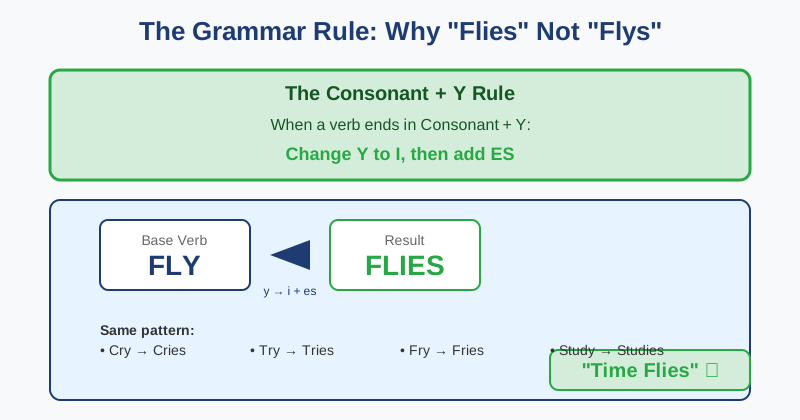
I found that this rule applies consistently to many English verbs. Here's how I understand it:
- Fly (ends in consonant+y) → Flies (change y to i + es)
- Cry (ends in consonant+y) → Cries (change y to i + es)
- Try (ends in consonant+y) → Tries (change y to i + es)
The Consonant + Y Rule I Learned
I found that this grammar rule is consistent across English. When a verb ends with a consonant followed by "y", you must change the "y" to "i" before adding endings like -s, -ed, or -ing.
| Base Verb | Third Person Singular | Pattern I Found |
|---|---|---|
| Fly | Flies | Consonant + y → Change y to i + es |
| Cry | Cries | Consonant + y → Change y to i + es |
| Try | Tries | Consonant + y → Change y to i + es |
| Fry | Fries | Consonant + y → Change y to i + es |
| Dry | Dries | Consonant + y → Change y to i + es |
| Study | Studies | Consonant + y → Change y to i + es |
Important Exception I Found
I noticed that verbs ending in vowel + y don't follow this rule. They just add "s" normally:
- Play → Plays (not "Plays")
- Stay → Stays (not "Staies")
- Enjoy → Enjoys (not "Enjoies")
What "Time Flies" Means
I found that "time flies" is an idiomatic expression that means time passes very quickly. It's commonly used when we realize how fast time has passed, often with a sense of surprise or nostalgia.
1. Expressing Surprise
I use this when I can't believe how fast time passed:
"I can't believe it's been 5 years since graduation. Time flies!"
2. Reflecting on Memories
When looking back at old photos or memories:
"Looking at these baby pictures... time flies so fast."
3. "Time Flies When You're Having Fun"
The most common variation I found:
"We've been talking for 3 hours! Time flies when you're having fun."
4. "Time Flies By"
Another variation with the same meaning:
"Time flies by when you're busy with work you love."
Common Mistakes I've Found and How to Avoid Them
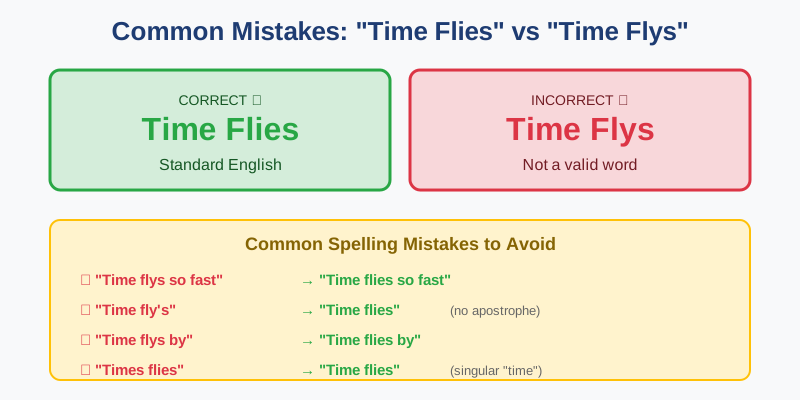
Through my research, I identified several common mistakes people make with this phrase. Here's what I found and how you can avoid them.
| Mistake I Found | Correct Version | Why It's Wrong |
|---|---|---|
| "Time flys so fast" | "Time flies so fast" | Never use "flys" - always "flies" |
| "Time fly's" | "Time flies" | No apostrophe needed - it's not possessive |
| "Time flys by" | "Time flies by" | Even with "by", it's still "flies" |
| "Times flies" | "Time flies" | It's singular "time", not plural "times" |
Real-World Examples I've Collected
I want to show you some real-world examples of how "time flies" is used correctly in different contexts.
Example 1: Social Media Post
Just found my old college photo albums. 10 years have already passed! 🎓
Time flies! Can't believe how much has changed since then. #nostalgia #memories
Example 2: Birthday Card
Dear Sarah,
Happy 30th Birthday! They say time flies when you're having fun, and watching you grow into the amazing person you are today has been a joy.
Love,
Mom
Example 3: Work Email
Hi Team,
I can't believe it's already been a year since we launched this project. Time flies!
Thank you all for your hard work and dedication.
Best regards,
John
Example 4: Conversation
Person A: "Is it really Friday already?"
Person B: "I know! Time flies when you're having fun."
Person A: "We should do this more often!"
Time Flies vs Time Flys: My Summary Table
After all my research, I've created this comprehensive comparison to help you understand the difference once and for all.
| Word | Status | My Explanation |
|---|---|---|
| Time Flies | Correct | Standard English. Third-person singular of "fly" with consonant+y rule applied. |
| Time Flys | Incorrect | A common misspelling. "Flys" is not a word in standard English. |
Other Common Variations I Found
During my research, I discovered several variations of the phrase. Let me share what I found about each one.
| Variation | Correct? | How I Use It |
|---|---|---|
| Time flies | Yes ✓ | Basic form. Used as exclamation or statement. |
| Time flies by | Yes ✓ | Includes directional "by". Same meaning. |
| Time flies when you're having fun | Yes ✓ | Most common variation. Explains why time flies. |
| How time flies | Yes ✓ | Often used to express amazement at time passing. |
| Time flies so fast | Yes ✓ | Emphasizes the speed of time passing. |
Key Pattern I Noticed
No matter which variation you use, I found that it's always "flies" never "flys". The word "flies" remains consistent across all forms of this expression.
Memory Tips I Use to Remember the Rule
I've developed some simple memory tricks that help me remember that "time flies" is correct. Here's what works for me:
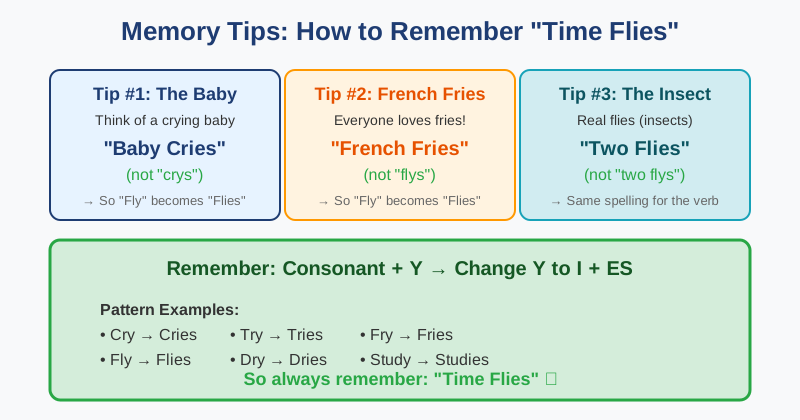
Memory Trick #1: The "Baby" Method
I think of the word "baby". If I say "The baby cries" (not "crys"), I remind myself that consonant+y words change y to i. So "fly" becomes "flies", just like "cry" becomes "cries".
Memory Trick #2: The French Fry Test
I ask myself: "Do I eat french fries or french flys?" The answer is always "fries". This reminds me that "fry" becomes "fries", so "fly" must become "flies".
Memory Trick #3: The Real Flies
I think of actual flies (the insects). The plural of "fly" (insect) is "flies". I use the same spelling for the verb "to fly" - it's always "flies" not "flys".
Other Words That Follow the Same Rule
I found that "time flies" is just one example of a broader grammar pattern. Many other verbs follow the same consonant+y → consonant+i+es rule.
| Base Verb | Third Person | Example Sentence |
|---|---|---|
| Cry | Cries | "The baby cries when she's hungry." |
| Try | Tries | "She tries her best every day." |
| Fry | Fries | "The chef fries the potatoes." |
| Dry | Dries | "The sun dries the wet clothes." |
| Study | Studies | "He studies for exams every night." |
| Carry | Carries | "She carries her backpack to school." |
| Worry | Worries | "He worries about his future." |
| Fly | Flies | "Time flies when you're having fun." |
Pro Tip I Learned
I found that auto-correct and spell-checkers will almost always catch "time flys" and suggest "time flies" instead. This is because "flys" is not recognized as a valid word in standard English dictionaries!
Explore More Grammar Guides
If you found this analysis helpful, I've created other detailed guides to help you master English grammar and spelling:
- 👉 Puting or Putting: Which is Correct?
My complete analysis of the correct spelling with grammar rules explained.
- 👉 Vender or Vendor: The Definitive Answer
I researched which spelling is correct and why it matters.
- 👉 Is "Good Morning" One Word?
Learn why "good morning" is always two words, not one.
- 👉 How to Spell Putting: A Complete Guide
Deep dive into spelling rules and common mistakes I've found.
- 👉 Put vs Keep: What's the Difference?
My comparison of these two common verbs and their meanings.
Frequently Asked Questions
Is it "time flies" or "time flys"?
I found that "time flies" is the correct spelling. "Time flys" is grammatically incorrect and should never be used in standard English.
Why is it "flies" and not "flys"?
I learned that when a verb ends in a consonant followed by 'y', you change the 'y' to 'i' before adding 'es' for the third-person singular form. So 'fly' becomes 'flies', just like 'cry' becomes 'cries' and 'try' becomes 'tries'.
What does "time flies" mean?
I found that "time flies" means time passes very quickly. It's an idiomatic expression used when you realize how fast time has passed, like when saying "I can't believe it's been 10 years - time flies!"
Can I use "time flys" in informal writing?
I recommend never using "time flys" even in informal contexts. It's a misspelling that makes your writing look unprofessional. Always use "time flies" regardless of the context.
What are other words that follow the same rule as "flies"?
I discovered many words follow this pattern: cry → cries, try → tries, fry → fries, dry → dries, study → studies, carry → carries, worry → worries. All these words end in consonant+y and change y to i before adding es.
Is "time flies when you're having fun" the correct expression?
Yes, I confirmed that "time flies when you're having fun" is grammatically correct. It's one of the most common variations of the phrase, using the correct "flies" spelling.
What about "time flies by" - is that correct?
I found that "time flies by" is also correct and commonly used. The addition of "by" doesn't change the spelling - it's still "flies" not "flys". For example: "Time flies by when you're busy."