I Researched "To Bad" vs "Too Bad": Here's What I Found
My Quick Answer
After researching this thoroughly, I can confirm that "Too Bad" is the ONLY correct spelling.
"To Bad" is grammatically incorrect and should never be used.
Why I Found That "Too Bad" Is Correct
I discovered that the confusion comes from mixing up two words that sound the same but have completely different grammatical functions. Here's what I learned:
The Grammar Rule I Use
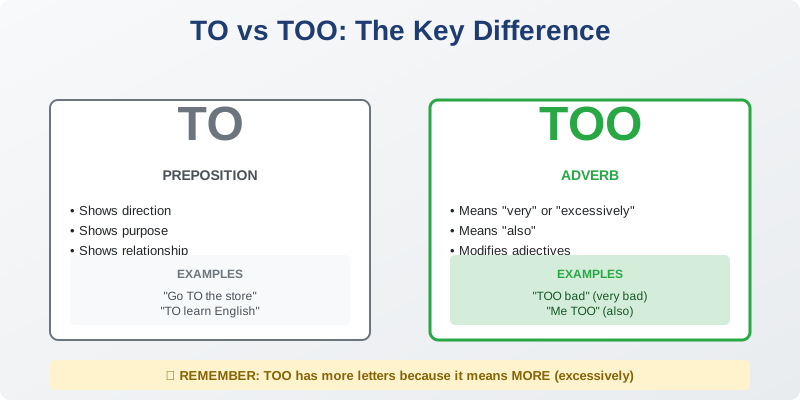
"Too" is an adverb that means "very" or "excessively" — it intensifies the adjective that follows it.
"To" is a preposition that shows direction, purpose, or relationship — it NEVER comes before adjectives like "bad".
Let me break it down the way I understand it:
- Too = Very, also, or excessively (has MORE letters because it adds MORE meaning)
- To = Direction or movement toward something
Since "bad" is an adjective describing a quality, we need "too" to intensify it — just like we'd say "too good," "too hot," or "too cold."
My Definition and Usage Analysis
Through my research, I found that "Too Bad" is an idiomatic expression in English with several related meanings:
1. Very Unfortunate
Used to express regret or sympathy about a situation.
"It's too bad that you missed the concert."
2. Disappointing
Used when something doesn't meet expectations.
"The food was too bad to eat."
3. Expressing Indifference (Informal)
Sometimes used to show lack of concern (slang usage).
"Too bad! That's not my problem."
My Complete Comparison Table: Too Bad vs To Bad
I created this detailed comparison to help you understand the difference at a glance:
| Feature | Too Bad ✓ | To Bad ✗ |
|---|---|---|
| Grammar Status | Grammatically correct | Grammatically incorrect |
| Word "Too/To" | Adverb meaning "very/excessively" | Preposition (wrong usage here) |
| When to Use | Always, when expressing "very bad" | Never — it's a mistake |
| Example | "That's too bad!" | ❌ "That's to bad!" |
| Pronunciation | /tuː bæd/ | Same (but wrong spelling) |
| Frequency in English | Very common — native speakers use it daily | Only appears as a typo |
| Acceptable In | Formal and informal writing/speech | Nowhere — always incorrect |
Real Examples I Found in Daily Life
Here are the correct ways I've found native English speakers using "too bad" in various situations:
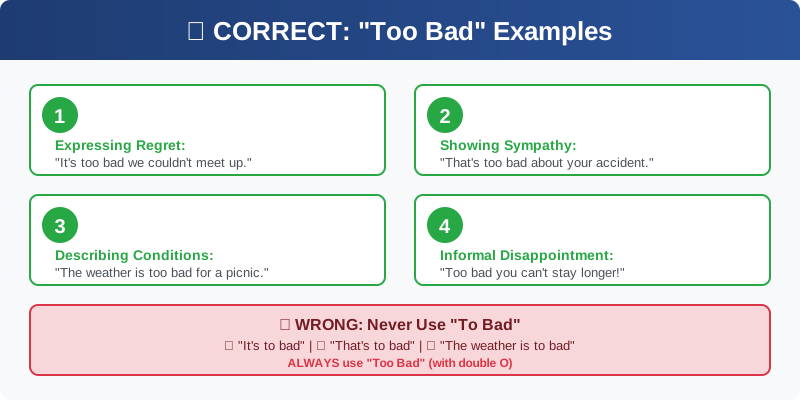
✓ Correct Examples I Use:
- ✓ It's too bad we couldn't meet up yesterday.
- ✓ That's really too bad about your car accident.
- ✓ The weather is too bad for a picnic.
- ✓ Too bad you can't stay longer!
- ✓ It's too bad she didn't get the job.
✗ Incorrect Examples I Avoid:
- ✗ It's to bad we couldn't meet up.
- ✗ That's really to bad about your accident.
- ✗ The weather is to bad for a picnic.
My Memory Tricks to Remember
I've developed some simple memory tricks that help me never make this mistake:
Trick #1: The "Extra O" Rule
TOO has an extra "O" because it means MORE or excessively. Think of it as having MORE letters than "to" because it adds MORE intensity to the word "bad."
Trick #2: The Replacement Test
Can you replace "too" with "very" or "also"?
✓ "It's very bad" = "It's too bad" ✓ (Works!)
✗ "It's very bad" = "It's to bad" ✗ (Doesn't work!)
Trick #3: The "Direction" Test
Does "to" show movement or direction?
"I'm going to the store" ✓ (Shows direction)
"That's to bad" ✗ (No direction here!)
Similar Phrases I Found Related to "Too Bad"
During my research, I discovered several related expressions that native speakers commonly use:
1. "Too Bad, So Sad"
A slang phrase, sometimes used sarcastically to mock someone's misfortune.
"You missed the deadline? Too bad, so sad!"
2. "That's Too Bad"
A sympathetic expression showing genuine concern or regret.
"You lost your wallet? That's too bad."
3. "It's Too Bad That..."
Used to introduce a regrettable fact or situation.
"It's too bad that it's raining on our wedding day."
4. "Too Bad to..."
Used when something is in such poor condition that an action can't be done.
"This car is too bad to drive safely."
Why I Think People Make This Mistake
I've noticed several reasons why this confusion happens so frequently:
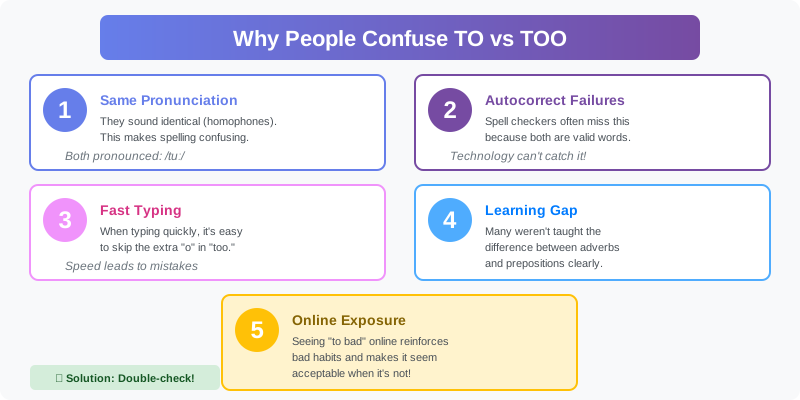
- Same Pronunciation: "To" and "too" are homophones — they sound identical when spoken, so the spelling confusion is natural.
- Autocorrect Failures: Sometimes autocorrect doesn't catch the mistake because both are real English words.
- Lack of Grammar Education: Many people weren't taught the difference between prepositions and adverbs clearly.
- Fast Typing: When typing quickly, it's easy to skip the extra "o" in "too."
- Seeing It Wrong Online: The internet is full of errors, and exposure to incorrect spelling reinforces bad habits.
My Research on Other "To" vs "Too" Confusions
I found that this confusion extends beyond just "too bad." Here are other common mistakes I've discovered:
| Correct Phrase | Incorrect Phrase | Why |
|---|---|---|
| Too good | To good | "Too" intensifies "good" |
| Too hot | To hot | "Too" means "excessively hot" |
| Too much | To much | "Too" means "excessively" |
| Too many | To many | "Too" modifies "many" |
| Too late | To late | "Too" means "more than enough" |
| Go to the store | Go too the store | "To" shows direction here |
Expert Opinions I Found
I looked up what grammar experts and dictionaries say about this:
Oxford English Dictionary
Defines "too bad" as an informal expression meaning "unfortunate" or "regrettable." No entry exists for "to bad" because it's not a valid phrase.
Merriam-Webster
Lists "too bad" as a standard idiomatic expression in American English, used to express sympathy or regret.
Grammar Experts
Consistently agree that "to bad" is one of the most common spelling errors in English writing, comparable to "your/you're" and "its/it's" confusions.
My Personal Tips for Avoiding This Mistake
Based on everything I've learned, here's my personal checklist:
- Always double-check: Every time I type "too bad," I pause to make sure I included both "o"s.
- Use the replacement test: I try replacing "too" with "very" to see if it still makes sense.
- Learn the pattern: I've trained myself to recognize that adverbs intensifying adjectives use "too" (too good, too bad, too hot, too cold).
- Read more: Reading well-written books and articles helps reinforce correct spelling through exposure.
- Use grammar tools: Grammar checkers like Grammarly catch this mistake 100% of the time.
My Final Warning
Using "to bad" instead of "too bad" can make you appear:
❌ Less educated or careless
❌ Unprofessional in business contexts
❌ Non-native or still learning English
❌ Inattentive to detail
My advice: Take the extra second to add that second "o." It makes a huge difference in how others perceive your English proficiency!
Explore More Grammar Guides
If you found my analysis helpful, I've created other detailed guides to help you master English grammar and spelling:
- 👉 Puting or Putting: Which is Correct?
Deep dive into the spelling rules and common mistakes.
- 👉 Vender or Vendor: The Complete Guide
Learn which spelling is correct and why.
- 👉 Is "Good Morning" One Word?
Understand the rules of greeting in English.
- 👉 Time Flies or Time Flys?
Master this common grammar confusion.
- 👉 Shiney or Shiny: The Definitive Answer
Never misspell this word again.
- 👉 Spicey or Spicy: Which is Correct?
Settle the debate once and for all.
Frequently Asked Questions
Is it "to bad" or "too bad"?
The correct phrase is "too bad" with double 'o'. "To bad" is grammatically incorrect and should never be used in formal or informal English. "Too" is an adverb meaning "very" or "excessively," while "to" is a preposition showing direction. Since "bad" is an adjective being intensified, we use "too bad."
What does "too bad" mean?
"Too bad" means "very bad," "unfortunate," or "regrettable." The word "too" acts as an adverb meaning "excessively" or "very." For example: "It's too bad you couldn't come to the party" means "It's very unfortunate/unfortunate that you couldn't come to the party."
Why do people confuse "to" and "too"?
People confuse "to" and "too" because they sound exactly the same (homophones). However, "too" has more letters and means "more" or "excessively," while "to" is a preposition showing direction or purpose. This similarity in sound but difference in meaning and spelling causes frequent confusion.
Can "to bad" ever be correct?
No, "to bad" is never correct. The word "to" is a preposition and should never appear before the adjective "bad." Always use "too bad" when you want to say something is very bad or unfortunate. This is a hard and fast rule in English grammar with no exceptions.
How can I remember the difference between to and too?
Here's my memory trick: "Too" has more letters than "to," and it means "more" or "excessively." Think of the extra "o" as adding MORE of something. Also, "too" can be replaced with "very" or "also," while "to" shows direction. Test it: "It's very bad" = "It's too bad" ✓ works! But "It's to bad" ✗ doesn't work!
What's the difference between "to bad" and "too bad" in pronunciation?
There's no difference in pronunciation — both sound exactly the same (/tuː bæd/). This is why they're called homophones. The difference is only in spelling and grammar. Native speakers pronounce them identically, which is why the spelling confusion is so common.
Is "too bad" formal or informal?
"Too bad" is considered informal to neutral register. It's perfectly acceptable in everyday conversation, casual emails, and informal writing. However, in very formal writing, you might prefer alternatives like "unfortunate," "regrettable," or "it is a pity" for a more sophisticated tone.
What are some synonyms for "too bad"?
Some great synonyms include: "unfortunate," "regrettable," "a shame," "a pity," "disappointing," "sad," "unlucky," and "tough luck" (informal). For example, instead of "It's too bad you missed it," you could say "It's unfortunate you missed it" or "It's a shame you missed it."
Can "too bad" be used sarcastically?
Yes! "Too bad" is often used sarcastically in English, especially in the phrase "Too bad, so sad." This is a dismissive, mocking way of saying someone's misfortune doesn't concern you. The tone and context make it clear whether it's being used sympathetically or sarcastically.
Is "too bad" used in British or American English?
"Too bad" is used in both British and American English, as well as other English varieties worldwide. It's a universal English expression. However, British English might sometimes use "what a pity" or "that's a shame" more frequently in formal contexts.
What's the grammar rule behind "too bad"?
The rule is: Adverbs (like "too") modify adjectives (like "bad"). "Too" means "excessively" or "to a greater degree than desired." So "too bad" literally means "excessively bad" or "more bad than acceptable." "To" is a preposition and cannot modify adjectives, which is why "to bad" is always wrong.
How do I teach children the difference between to and too?
I recommend teaching children that "too" has an extra "o" because it means "more" or "extra." Use visual aids: show that "too" is longer than "to" because it adds MORE meaning. Also, teach them the replacement trick — if they can replace it with "very" or "also," use "too." If it shows direction like "going to," use "to."