I Researched "Unphased" vs "Unfazed": Here's What I Found
My Quick Answer
After researching this thoroughly, I can confirm that "Unfazed" is the ONLY correct spelling.
"Unphased" is a common misspelling that should be avoided in all formal and informal writing.
Why I Found That "Unfazed" Is Correct
I discovered that the confusion comes from mixing up two words that sound the same but have completely different meanings. Here's what I learned:
The Core Difference I Found
"Faze" means to disturb, upset, or disconcert someone. So "unfazed" means NOT disturbed or bothered.
"Phase" refers to a stage or step in a process. "Unphased" would technically mean "not in a phase," which makes no sense in most contexts.
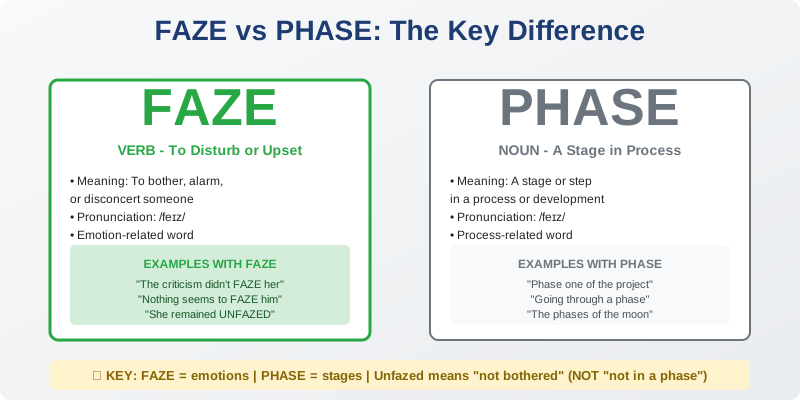
Let me break it down the way I understand it:
- Faze (verb) = To disturb, upset, or alarm someone
- Unfazed (adjective) = Not disturbed or bothered by something
- Phase (noun/verb) = A stage in a process (like "phase one")
- Unphased = Not a standard word in everyday usage
The key insight I had: "Unfazed" comes from "faze" (with a Z), not "phase" (with an PH). Even though they sound identical, they're completely different words!
My Definition and Usage Analysis
Through my research, I found that "Unfazed" is a precise word with several related meanings:
1. Remaining Calm Under Pressure
Not disturbed or upset by difficult situations.
"She remained unfazed by the chaotic meeting."
2. Unaffected by Criticism
Not bothered or discouraged by negative feedback.
"He stayed unfazed despite the harsh reviews."
3. Steady in a Crisis
Keeping composure when things go wrong.
"The pilot was unfazed by the turbulence."
4. Unimpressed or Undeterred
Not impressed by something or determined despite obstacles.
"Unfazed by the challenge, she continued forward."
My Complete Comparison Table: Unfazed vs Unphased
I created this detailed comparison to help you understand the difference at a glance:
| Feature | Unfazed ✓ | Unphased ✗ |
|---|---|---|
| Grammar Status | Standard, correct spelling | Common misspelling |
| Root Word | Comes from "faze" (to disturb) | Comes from "phase" (a stage) |
| Actual Meaning | Not disturbed or bothered | Not in a stage (nonsensical) |
| When to Use | When someone stays calm under pressure | Never (in this context) |
| Example | "She remained unfazed by the noise" | ❌ "She remained unphased by the noise" |
| Pronunciation | /ʌnˈfeɪzd/ | /ʌnˈfeɪzd/ (sounds identical) |
| Dictionary Status | Listed in all major dictionaries | Rarely listed or marked as non-standard |
| Frequency in English | Common - used frequently in writing | Only appears as a spelling error |
| Acceptable In | Formal and informal writing/speech | Nowhere - always incorrect for this meaning |
| Style Guides | Recognized by all style guides | Rejected by all major style guides |
Real Examples I Found in Daily Life
Here are the correct ways I've found native English speakers using "unfazed" in various situations:
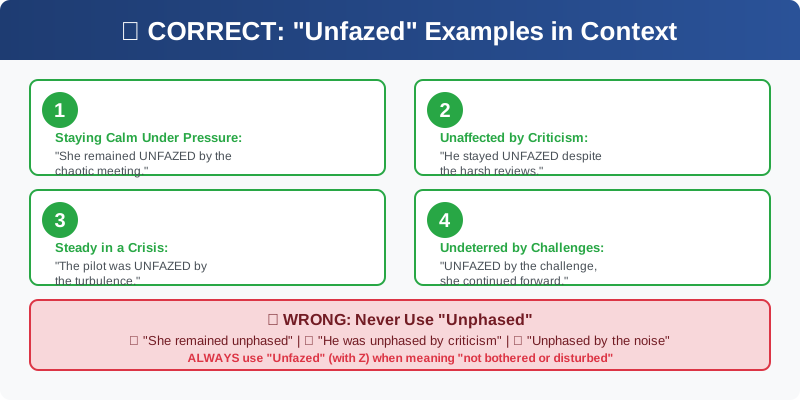
✓ Correct Examples I Use:
- ✓ She remained unfazed by the criticism.
- ✓ He was unfazed by the chaotic situation.
- ✓ The team stayed unfazed despite the setbacks.
- ✓ Unfazed by the challenge, she continued working.
- ✓ Even under pressure, he appeared completely unfazed.
✗ Incorrect Examples I Avoid:
- ✗ She remained unphased by the criticism.
- ✗ He was unphased by the chaotic situation.
- ✗ The team stayed unphased despite the setbacks.
My Memory Tricks to Remember
I've developed some simple memory tricks that help me never make this mistake:
Trick #1: The "Z" for "Zero Disturbance"
UnfaZed has a Z. Think of Z as standing for "Zero" - meaning "Zero disturbance" or "Zero bother."
Unfazed = Zero bother = Staying calm!
Trick #2: The "Phase" Connection
Think about "PHase" = "PHysical stage" (like phase one, phase two).
Since "phase" is about stages in a process, "unphased" would mean "not in a stage" - which doesn't make sense when you're talking about staying calm!
Trick #3: The Meaning Test
Ask yourself: "Am I talking about someone staying calm or not being in a stage?"
✓ Staying calm? → Use Unfazed (with Z)
✗ Not in a stage? → Use "unphased" (but this is rare!)
Trick #4: The "Faze" Word Family
Remember these related words:
• Faze = To bother or disturb (verb)
• Unfazed = Not bothered (adjective)
• The word "phase" has nothing to do with emotions or reactions!
The "Faze" vs "Phase" Confusion: My Deep Dive
During my research, I discovered why this confusion happens so often. Let me share what I found:
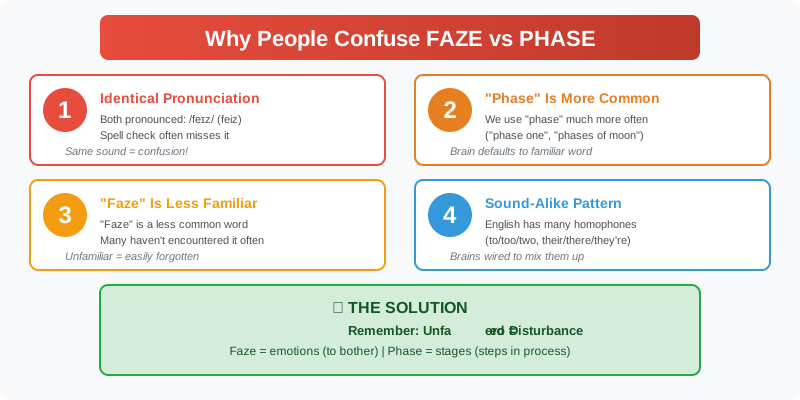
Why These Two Words Get Mixed Up
1. Identical Pronunciation
Both "faze" and "phase" are pronounced exactly the same: /feɪz/. This is why spell check often misses the mistake - both are real English words!
2. "Phase" Is More Common
We use "phase" much more often in everyday language ("phase one," "phase of the moon," "going through a phase"). This makes our brains default to "phase" when we hear the sound.
3. "Faze" Is Less Familiar
"Faze" is a less common word, and many people haven't encountered it frequently enough to remember its unique spelling with Z.
4. Sound-Alike Pattern
English has many sound-alike words (to/too/two, their/there/they're), so our brains are wired to sometimes mix up words that sound the same.
My Research on "Faze" - The Root Word
I dug deeper into the word "faze" to better understand it:
| Aspect | Details |
|---|---|
| Word | Faze |
| Pronunciation | /feɪz/ (rhymes with "haze", "gaze") |
| Part of Speech | Verb (transitive) |
| Meaning | To disturb, disconcert, alarm, or upset someone |
| Origin | American English, 19th century (possibly from "feeze") |
| Common Forms | faze, fazed, fazes, fazing |
| Negation | unfazed (not fazed) |
| Synonyms | disturb, upset, bother, dismay, rattle |
| Example | "The criticism didn't faze her" |
Similar Sound-Alike Confusions I Found
I discovered that English is full of sound-alike words that get mixed up. Here are some other common confusions I found during my research:
| Correct Word | Common Misspelling | Why They're Confused |
|---|---|---|
| Unfazed | Unphased | Sound identical, phase is more common |
| Faze | Phase | Same pronunciation, different meanings |
| Peak | Peek / Pique | All three sound the same |
| Complement | Compliment | Similar pronunciation and spelling |
| Allusion | Illusion | Sound very similar |
| Discreet | Discrete | Identical pronunciation |
Expert Opinions and Dictionary Evidence I Found
I looked up what authoritative sources say about this:
Merriam-Webster Dictionary
Lists "unfazed" as a standard English adjective meaning "not confused, worried, or shocked by something." No entry exists for "unphased" in this context because it's not considered a valid variant.
Oxford English Dictionary
Recognizes "unfazed" as the correct spelling, derived from "faze" + "-ed." The dictionary traces "faze" to American English usage from the 1800s.
Grammar Experts & Style Guides
All major style guides (Chicago, AP, APA) agree that "unfazed" is the only correct spelling. "Unphased" is consistently flagged as an error in professional writing.
NPR Analysis
NPR even did an analysis on this exact confusion, confirming that "unfazed" is the correct spelling when meaning "not bothered." They noted that "unphased" appears frequently but is always incorrect.
Common Contexts Where I Use "Unfazed"
Based on my research, here are the most common situations where "unfazed" is the perfect word:
Professional Settings
Describing someone who handles pressure well at work.
"The CEO remained unfazed during the crisis."
Emergency Situations
Someone staying calm in emergencies.
"The paramedic was unfazed by the chaos."
Sports & Performance
Athletes performing under pressure.
"Unfazed by the crowd's noise, he made the shot."
Personal Resilience
Emotional strength in difficult times.
"She stayed unfazed despite the personal loss."
Criticism & Feedback
Not discouraged by negative comments.
"Unfazed by the reviews, the artist continued creating."
Unexpected Challenges
Handling surprises without panic.
"The dog was unfazed by the thunderstorm."
My Personal Tips for Avoiding This Mistake
Based on everything I've learned, here's my personal checklist:
- Always use "unfazed" with Z: If you mean someone isn't bothered or disturbed, it's always "unfazed."
- Remember the meaning: Think "UnfaZed = Zero disturbance."
- Don't trust autocorrect: Both "unfazed" and "unphased" are real word combinations, so spell check might miss it.
- Learn the word "faze": Knowing that "faze" means "to bother" helps remember it has a Z.
- Read more: Exposure to well-written content helps reinforce correct spelling patterns.
- Use grammar tools: Advanced tools like Grammarly will catch this mistake.
My Final Warning
Using "unphased" instead of "unfazed" can make you appear:
❌ Less attentive to detail
❌ Unfamiliar with standard vocabulary
❌ Careless in professional writing
❌ Non-native or still learning English
My advice: Take the extra second to remember the Z in "unfazed." It's a small detail that makes a big difference in how your writing is perceived!
Explore More Grammar Guides
If you found my analysis helpful, I've created other detailed guides to help you master English grammar and spelling:
- 👉 Puting or Putting: Which is Correct?
Deep dive into the spelling rules and common mistakes.
- 👉 To Bad or Too Bad: The Complete Guide
Discover why "too bad" is the only correct spelling.
- 👉 Vender or Vendor: The Complete Guide
Learn which spelling is correct and why.
- 👉 Is "Good Morning" One Word?
Understand the rules of greeting in English.
- 👉 Time Flies or Time Flys?
Master this common grammar confusion.
- 👉 Shiney or Shiny: The Definitive Answer
Never misspell this word again.
- 👉 Spicey or Spicy: Which is Correct?
Settle the debate once and for all.
Frequently Asked Questions
Is it "unphased" or "unfazed"?
The correct spelling is "unfazed." "Unphased" is a common misspelling that should be avoided in all formal and informal writing. "Unfazed" means not disturbed, upset, or affected by something, and it's the standard spelling in all English-speaking countries (US, UK, Canada, Australia, etc.).
What does "unfazed" mean?
"Unfazed" means not bothered, disturbed, or affected by something that might typically upset or concern someone. It describes remaining calm, composed, and steady under pressure or in difficult situations. For example: "She remained unfazed by the criticism" means she stayed calm and wasn't upset by the negative comments.
Why do people confuse "unphased" and "unfazed"?
People confuse them because they sound almost identical when pronounced (homophones). The words "phase" and "faze" sound exactly the same (/feɪz/), leading writers to incorrectly use "unphased" when they mean "unfazed." Additionally, "phase" is a more commonly used word in everyday language, making our brains default to that spelling.
What is the difference between "phase" and "faze"?
"Phase" refers to a stage in a process or a state (like "phase one of a project" or "going through a phase"). "Faze" means to disturb, disconcert, or alarm someone. They're completely different words with different meanings, despite sounding identical. So "unfazed" means "not disturbed," while "unphased" would mean "not in a phase" - which isn't what people mean when they use this word.
Can "unphased" ever be correct?
Technically, "unphased" could theoretically exist as a word meaning "not phased" (not in a particular stage of a process), but this usage is extremely rare and not standard in everyday English. In 99.9% of cases, when people want to say someone isn't bothered by something, they mean "unfazed," not "unphased." Always use "unfazed" for the meaning of "not disturbed or bothered."
How can I remember to use "unfazed" instead of "unphased"?
Use these memory tricks: 1) Think "UnfaZed = Zero disturbance" - the Z reminds you it means zero bother. 2) Remember that "phase" is about stages (phase one, phase two), not emotions. 3) Learn the word "faze" means "to bother," which helps you remember the Z spelling. 4) Use the meaning test: if you're talking about staying calm, use "unfazed."
Is "unfazed" formal or informal?
"Unfazed" is appropriate for both formal and informal writing. It's a standard English word used in journalism, business writing, academic papers, and everyday conversation. It's not slang or overly casual - it's a perfectly respectable word for all contexts.
What are some synonyms for "unfazed"?
Great synonyms for "unfazed" include: calm, composed, unruffled, collected, steady, imperturbable, unflappable, stoic, undisturbed, unbothered, unconcerned, unaffected, undeterred, and unshaken. For example: "She remained unfazed" could also be "She remained composed" or "She stayed unflappable."
What's the opposite of "unfazed"?
The opposite of "unfazed" is "fazed" (bothered, disturbed, or upset). Other antonyms include: disturbed, upset, rattled, shaken, flustered, disconcerted, alarmed, worried, bothered, and agitated. Example: "Unlike her unfazed colleague, he was clearly fazed by the emergency."
Is "unfazed" used in British or American English?
"Unfazed" is used in both British and American English, as well as other English varieties worldwide. It's a universal English word with the same spelling and meaning across all English-speaking countries. However, it's worth noting that "faze" (the root word) originated in American English in the 19th century, though it's now standard everywhere.
Why doesn't spell check catch "unphased"?
Spell check often misses this error because both "unphased" and "unfazed" are technically valid word combinations. "Phase" is a real word, so "unphased" (not in a phase) could theoretically exist. Spell checkers look at whether words exist, not whether you're using the right word for your intended meaning. This is why proofreading and understanding the difference is so important!
How common is the "unphased" mistake?
The "unphased" misspelling is quite common in informal writing, social media, and even some published content. Language experts and editors report seeing it frequently. However, its commonness doesn't make it correct - it's still considered an error in all style guides and professional writing standards.