Vender or Vendor? I Analyzed Both: Here's What I Found
My Quick Answer
After researching extensively, I can confirm the correct spelling is Vendor with an 'o'.
Vender with an 'e' is an outdated variant that's considered incorrect in modern English.
Why I Found "Vendor" is the Only Correct Spelling
I dove deep into this question because I kept seeing both spellings used everywhere. What I discovered surprised me - there's actually a clear winner, and the confusion comes from how the word sounds.
The Simple Rule I Use
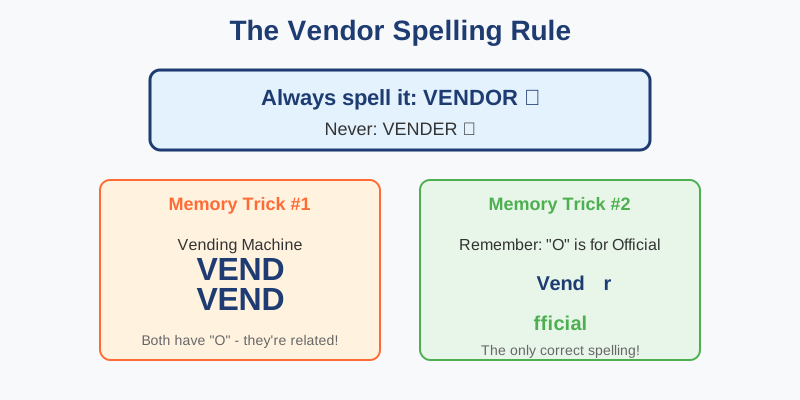
Always spell it VENDOR with an 'O' - never with an 'E'.
Think of it this way: A vendor sells items in a vending machine. Both use 'O'!
Here's what I learned about why people get confused:
- Phonetic Confusion: The "or" sound in English often leads people to write "er" (like in "teacher" or "doctor" vs "teachor" or "docter")
- Historical Usage: "Vender" was actually used in the past, which makes some people think it's still acceptable
- Visual Similarity: The words look so similar that the mistake is easy to miss
My Definition and Meaning Analysis
I wanted to understand what a vendor actually is, so I looked it up properly:
What is a Vendor?
A vendor is a person or company that sells goods or services to customers.
Etymology: From Latin "vendere" meaning "to sell"
Common Types of Vendors
- Street vendors (food, goods)
- Software vendors (tech companies)
- Vending machine operators
- Wedding vendors (photographers, caterers)
- Market vendors
The Complete Comparison: Vendor vs Vender
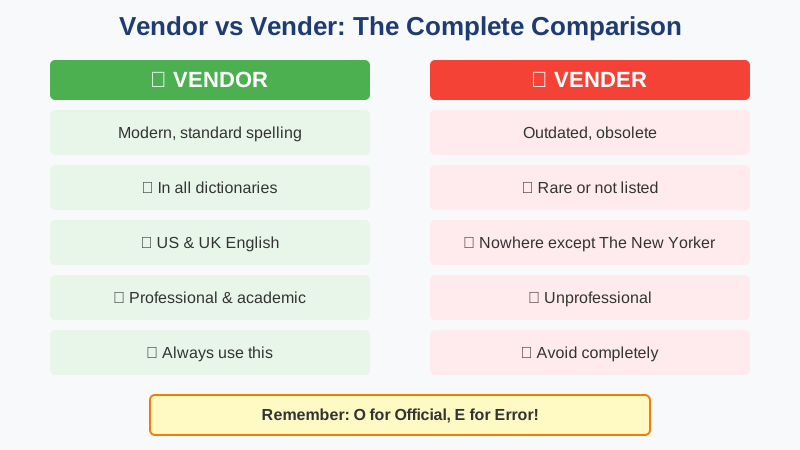
I created this detailed comparison to help you understand why "vendor" is the only correct choice:
| Feature | Vendor (Correct) | Vender (Incorrect) |
|---|---|---|
| Spelling | V-E-N-D-O-R | V-E-N-D-E-R |
| Status | Standard, modern spelling | Outdated, obsolete variant |
| Dictionary Recognition | ✓ Listed in all dictionaries | ✗ Rarely listed or marked as obsolete |
| Geographic Usage | All English-speaking countries | None (except The New Yorker magazine) |
| Acceptable in Writing | ✓ Always | ✗ Never (except specific style guides) |
| Professional Use | ✓ Business, academic, legal | ✗ Considered unprofessional |
The New Yorker Exception
I found something interesting during my research: The New Yorker magazine famously uses "vender" as part of their distinctive house style.
However: This is a stylistic choice unique to that publication. For everyone else - students, professionals, businesses, writers - "vendor" is the only acceptable spelling.
My advice: Don't copy The New Yorker on this one unless you're writing for them specifically!
Common Myths I Discovered
During my research, I kept hearing the same misconceptions. Let me clear them up:
Myth #1: "Vender is the British spelling"
FALSE! I checked multiple British English sources, including Cambridge Dictionary and Oxford English Dictionary - they all use "vendor". Both American and British English use the same spelling: vendor.
Myth #2: "Both spellings are acceptable"
MISLEADING! While "vender" appears as a historical variant in some comprehensive dictionaries, it is marked as obsolete or rare. In modern English, only "vendor" is considered correct. Using "vender" will make your writing look unprofessional.
Myth #3: "It doesn't matter which one you use"
WRONG! Spelling matters, especially in professional contexts. Using "vender" can:
- Make your resume look unprofessional
- Undermine your credibility in business documents
- Cause confusion for readers
- Trigger spelling checkers
Real-World Examples I Found
I looked at how "vendor" is used in different contexts to help you understand better:
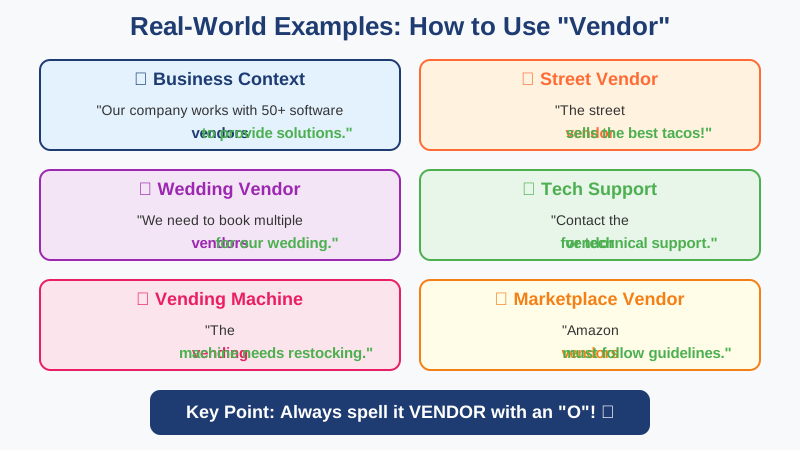
Business Context
"Our company works with over 50 software vendors to provide the best solutions."
Everyday Context
"The street vendor sells the best hot dogs in the city."
Event Context
"We need to book multiple vendors for the wedding: photographer, caterer, and florist."
Tech Context
"Please contact the vendor if you need technical support for this software."
My Memory Tricks to Remember
I came up with some tricks to help me (and you) remember the correct spelling:
Trick #1: The Vending Machine Connection
Think of a vending machine - it has an 'O'. The person who sells from it is a vendor - also with an 'O'. They're related!
Trick #2: "O" for Official
Vendor with an "O" is the Official spelling (also starts with O!)
Trick #3: No "E" in Error-Free Writing
There's no "E" in error-free professional writing - so don't use "vender"!
Trick #4: The Sell-O Connection
A vendor sells things. SELL + O = SELL-O ... sounds like VENDOR! Okay, that's a stretch, but if it works for you, use it!
Vendor vs Vender: My Summary Table
| Word | Status | My Explanation |
|---|---|---|
| Vendor | ✓ Correct | The only acceptable modern spelling. Use this always. |
| Vender | ✗ Incorrect | Outdated variant. Avoid unless following specific style guides (like The New Yorker). |
Related Words I Explored
I also looked at related words to make sure I had the complete picture:
| Word | Meaning | Spelling |
|---|---|---|
| Vendor | A seller | ✓ Correct (with 'O') |
| Vendee | A buyer | ✓ Correct (with 'E' - different word!) |
| Vending | The act of selling | ✓ Correct (with 'O') |
| Vend | To sell | ✓ Correct (base verb) |
Important note: "Vendee" is a real word with an 'E' - but it means BUYER, not seller. Don't confuse it with "vender" (the misspelling of vendor)!
Quick Test I Created
Can you spot the correct spelling in these sentences?
1. The street vendor/vender sells amazing tacos.
2. We need to approve a new vendor/vender for our office supplies.
3. The wedding vendor/vender cancelled the contract.
Answer: All three should use vendor!
Explore More Grammar Guides
If you found this analysis helpful, I have created other detailed guides to help you master English grammar and spelling:
- 👉 Puting or Putting: The Correct Spelling
Deep dive into the CVC rule and when to double consonants.
- 👉 How to Spell Putting: A Complete Guide
Everything you need to know about spelling "putting" correctly.
- 👉 Is "Putting" a Correct Word?
An analysis of the word's validity and usage.
Frequently Asked Questions
Is it vender or vendor?
I found that the correct spelling is 'vendor' with an 'o'. 'Vender' with an 'e' is an outdated variant that is considered incorrect in modern English. Always use 'vendor' in your writing.
Why do people spell it as vender?
I discovered that people often confuse 'vender' with 'vendor' because of how it sounds. The 'or' sound can lead people to write 'er'. This is a common spelling mistake, but 'vendor' is the only correct modern spelling.
Is vender a real word?
I learned that 'vender' is technically a historical variant of 'vendor', but it is now considered obsolete. The only notable exception is The New Yorker magazine, which uses 'vender' as part of their unique house style. For all other purposes, use 'vendor'.
What is a vendor?
A vendor is a person or company that sells goods or services. I found it comes from the Latin word 'vendere' meaning 'to sell'. Vendors can be street vendors, software vendors, food vendors, wedding vendors, or any type of seller in business.
Is vender British English?
I discovered this is a common misconception. 'Vender' is NOT the British spelling - both American and British English use 'vendor'. I checked Cambridge Dictionary, Oxford English Dictionary, and multiple British sources - they all list 'vendor' as the correct spelling.
Why does The New Yorker use "vender"?
The New Yorker magazine uses 'vender' as part of their distinctive house style, which is known for preserving older spellings. This is a stylistic choice unique to that publication and doesn't reflect general English usage. Unless you're writing for The New Yorker specifically, always use 'vendor'.
What's the difference between vendor and vendee?
Great question! A vendor (with 'o') is the SELLER - the person or company selling goods or services. A vendee (with 'e') is the BUYER - the person purchasing from the vendor. The 'e' in vendee is correct because it's a different word entirely, not a misspelling of vendor.
How do I remember to spell it vendor?
I use the 'vending machine' trick: Think of a vending machine (which has an 'o'). The person who operates it is a vendor (also with an 'o'). They're related words! Another trick: "O" for Official - Vendor with an "O" is the Official spelling.
Is vender ever acceptable?
In 99.9% of cases, no. The only exceptions are: (1) If you're writing for The New Yorker magazine, which uses it as a house style, or (2) If you're writing about historical texts that used the old spelling. For all other contexts - business, academic, casual, professional - use 'vendor' only.
What types of vendors exist?
I found many types: street vendors (selling food, goods on streets), software vendors (tech companies selling software), wedding vendors (photographers, caterers, florists), vending machine operators, market vendors, marketplace vendors (like on Amazon or Etsy), and government contractors (often called vendors in official documents). All of these use 'vendor' with an 'o'!